
 Save
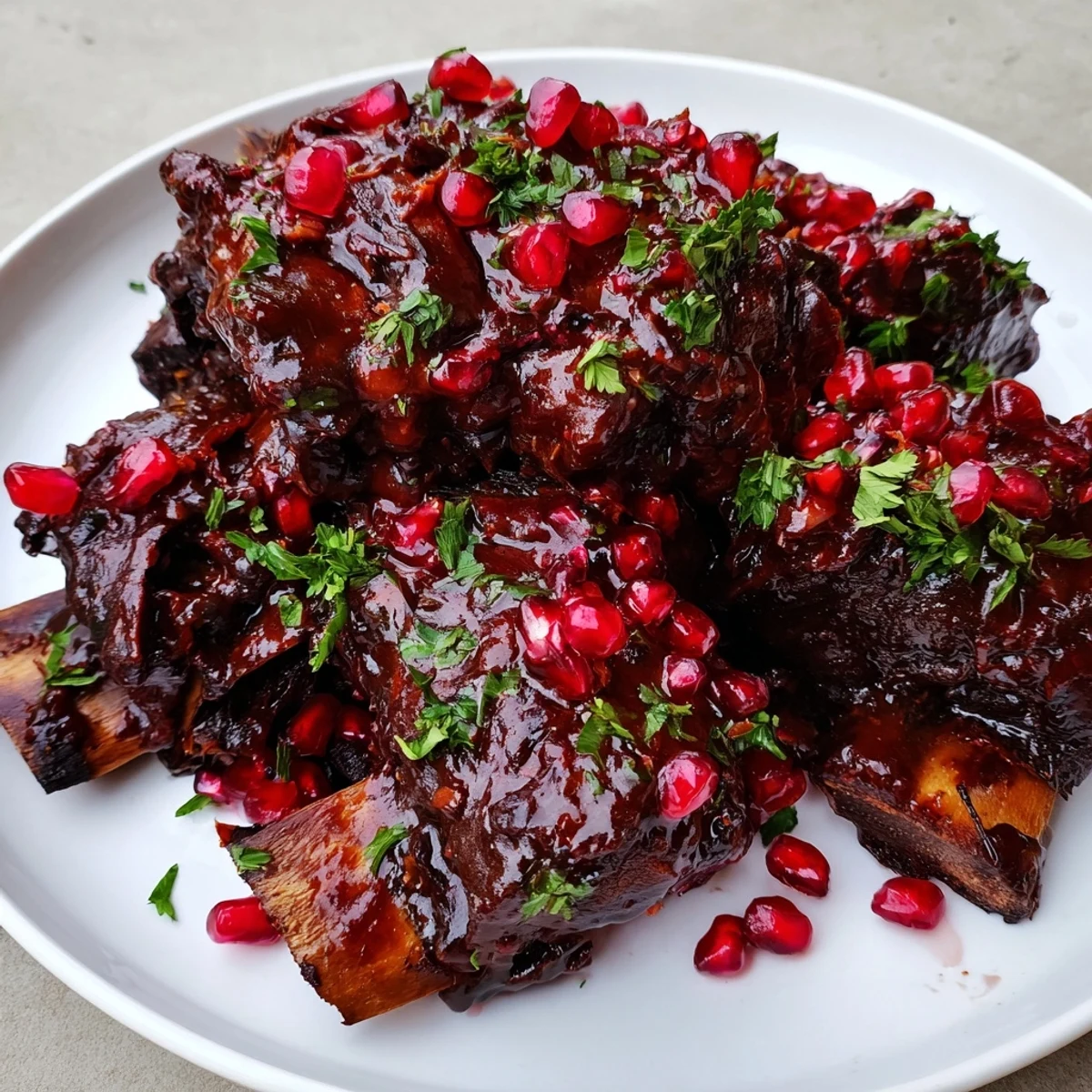
Save Discover tender beef short ribs slowly braised until fork-soft, enriched with sautéed aromatics and herbs. The dish is enhanced by a tangy-sweet pomegranate glaze, adding vibrant flavor and a glossy finish. Perfect for a comforting main course, this dish balances rich meatiness with fresh, fruity notes and a touch of sweetness. Ideal to pair with creamy mashed potatoes or polenta for a full, satisfying meal.
The first time I made braised short ribs was on a gray Sunday when I wanted something that would make the house smell like comfort. I had bought pomegranate molasses on impulse and ended up with this sticky, jewel-toned glaze that turned a classic dish into something dinner guests could not stop talking about. Now it is my go-to when I need to feel accomplished without doing much hands-on work.
I served these for a winter dinner party once and watched people actually scrape the glaze off their plates. My friend Sarah who claims not to like red meat went back for seconds. The pomegranate seeds scattered on top look like little rubies and somehow make the whole meal feel fancy even when you are just eating at your own kitchen table.
Ingredients
- Beef short ribs (bone-in): The bone adds incredible depth to the braising liquid and the fat cap keeps the meat moist through the long cook time.
- Olive oil: You want enough oil to get a proper sear without overcrowding the pot.
- Yellow onion, carrots, celery: These three build the aromatic foundation that makes the braising liquid taste complex and grounded.
- Garlic: Minced fresh garlic adds that punch that lingers underneath everything else.
- Tomato paste: Do not skip the two-minute cook time here or it will taste raw.
- Dry red wine: Any drinkable cabernet or merlot works perfectly for deglazing.
- Beef stock: Homemade is ideal but store-bought works fine if it is good quality.
- Pomegranate juice: Use pure juice not a blend with added sugars.
- Balsamic vinegar: A splash adds brightness that keeps the glaze from being one-dimensionally sweet.
- Fresh thyme: The woody herbs stand up well to long braising times.
- Bay leaves: Just two leaves provide that classic braised flavor.
- Kosher salt and black pepper: Season generously at the start because you cannot adjust the interior seasoning later.
- Pomegranate molasses: This thick concentrated syrup is what makes the glaze distinctive and glossy.
- Honey: Just enough to balance the sharpness of the molasses.
- Pomegranate seeds: Fresh seeds add pops of juice and a beautiful contrast.
- Fresh parsley: Chopped parsley brings a fresh herbal finish that cuts the richness.
Instructions
- Get the oven ready:
- Preheat to 160°C (325°F) so it is ready when you finish searing.
- Prep the meat:
- Pat the ribs thoroughly dry with paper towels and season all over with salt and pepper.
- Sear the ribs:
- Heat oil in a large Dutch oven over medium-high heat and brown ribs on all sides until deeply colored about 8 minutes then set aside.
- Build the base:
- Add onion carrots and celery to the same pot and sauté until softened about 5 minutes then stir in garlic for 1 minute more.
- Add depth:
- Stir in tomato paste and cook for 2 minutes until it darkens slightly.
- Deglaze the pot:
- Pour in red wine and scrape up all the browned bits from the bottom then simmer 3 minutes.
- Combine everything:
- Add beef stock pomegranate juice balsamic vinegar thyme bay leaves and return the ribs to the pot.
- Braise low and slow:
- Bring to a simmer then cover and transfer to the oven for 2 to 2.5 hours until the meat is fork-tender.
- Separate the meat:
- Remove ribs and set aside covered with foil to keep warm.
- Make the glaze:
- Strain the cooking liquid discard solids skim excess fat then combine 1.5 cups of liquid with pomegranate molasses and honey in a small saucepan.
- Reduce the glaze:
- Simmer over medium heat for 10 to 15 minutes until thickened to a syrupy consistency.
- Finish and serve:
- Brush the ribs generously with glaze and garnish with pomegranate seeds and parsley.
 Save
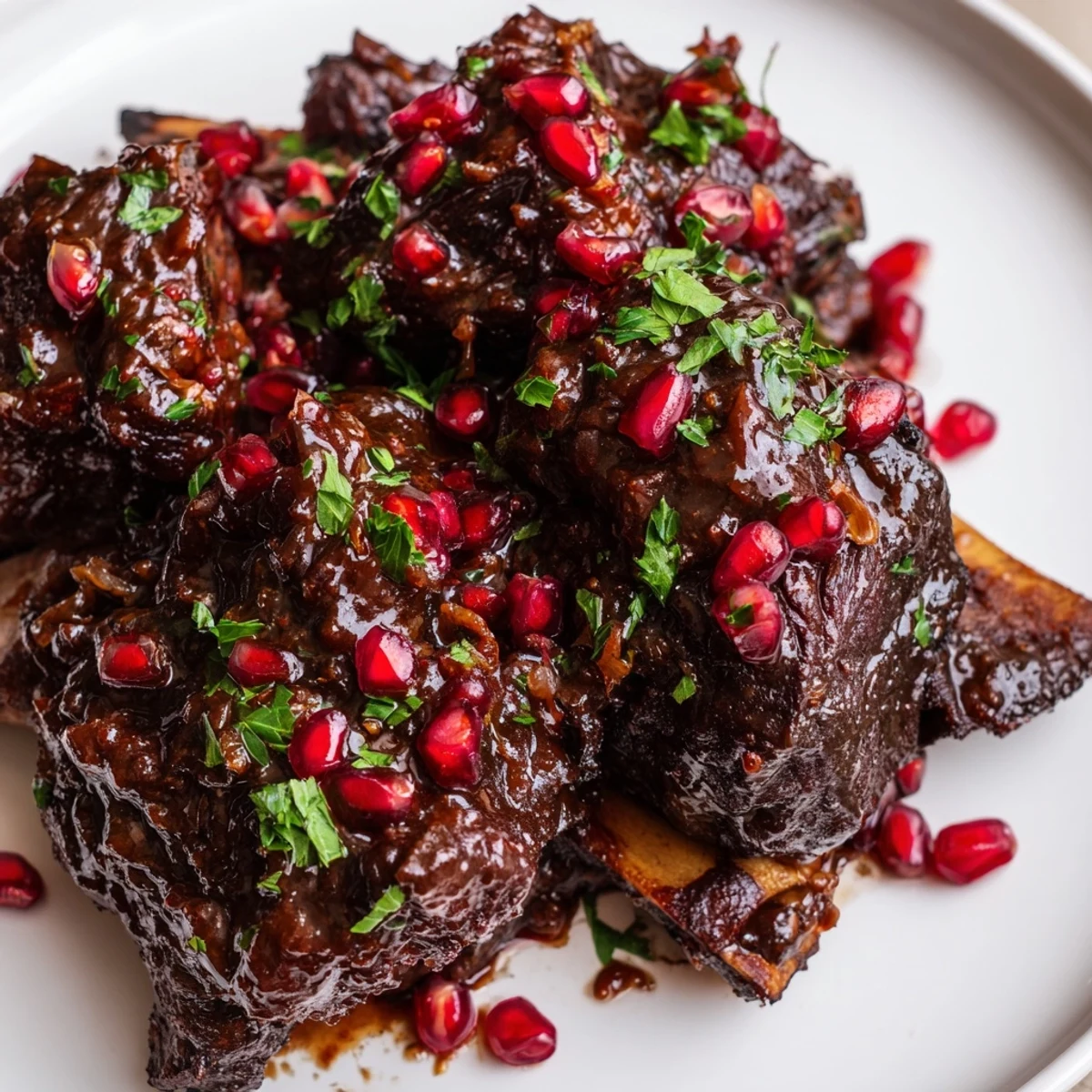
Save These ribs have become my winter entertaining secret because they taste even better made a day ahead. I love how the glaze hardens slightly when it hits the hot meat creating this incredible sticky coating that clings to every bite.
Choosing The Right Ribs
I have learned through a few failed attempts that bone-in short ribs give you the most flavorful results because the bone releases gelatin into the braising liquid. English-cut ribs (the thick rectangular ones) work better than the thin flanken-cut for this long slow cooking method. Ask your butcher to cut them from the chuck section if you have a choice.
Make It Ahead
Braised short ribs actually improve after a night in the refrigerator which makes them perfect for entertaining. You can braise the ribs up to three days ahead and refrigerate them in their cooking liquid. The fat will rise to the top and solidify making it incredibly easy to skim off before reheating and glazing.
Serving Suggestions
Creamy mashed potatoes are classic because they soak up the extra glaze beautifully but I also love these over soft polenta or even roasted root vegetables. The key is having something on the plate that can stand up to and balance all that rich flavor.
- A bold red wine like Cabernet Sauvignon or Syrah pairs perfectly.
- Roasted Brussels sprouts with balsamic make a great bitter counterpoint.
- Crusty bread for sopping up any remaining glaze is never a bad idea.
 Save
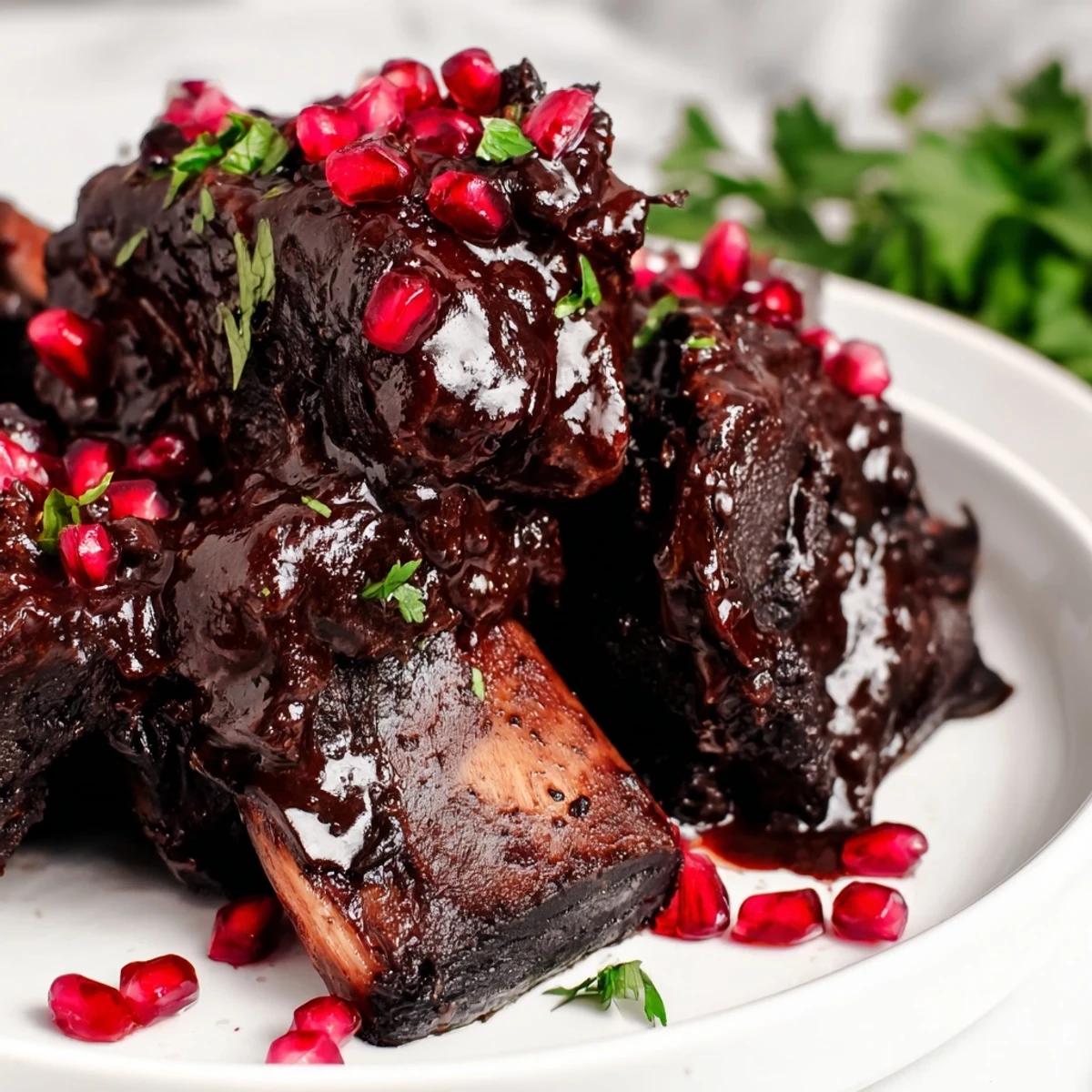
Save There is something deeply satisfying about serving a dish that looks this impressive but mostly took care of itself in the oven. The pomegranate glaze turns ordinary short ribs into the kind of meal that makes people pause before picking up their forks.
Recipe FAQs
- → What is the best cut of beef to use?
-
Bone-in beef short ribs work best due to their marbling and connective tissue, which melt into tender, flavorful meat when slow-cooked.
- → How long should the ribs be braised?
-
They should be braised for about 2 to 2.5 hours until the meat is tender enough to fall off the bone effortlessly.
- → Can I substitute red wine in the braising liquid?
-
Dry red wine adds depth and acidity, but a rich beef stock or grape juice can be used as alternatives if preferred.
- → How is the pomegranate glaze prepared?
-
The glaze is made by simmering strained braising liquid with pomegranate molasses and honey until thick and syrupy.
- → What garnishes complement this dish?
-
Fresh pomegranate seeds and chopped parsley provide a refreshing contrast and a pop of color to the rich ribs.
- → Are there recommended side dishes?
-
Creamy mashed potatoes or soft polenta pair well, helping to balance the rich flavors with smooth textures.