
 Save
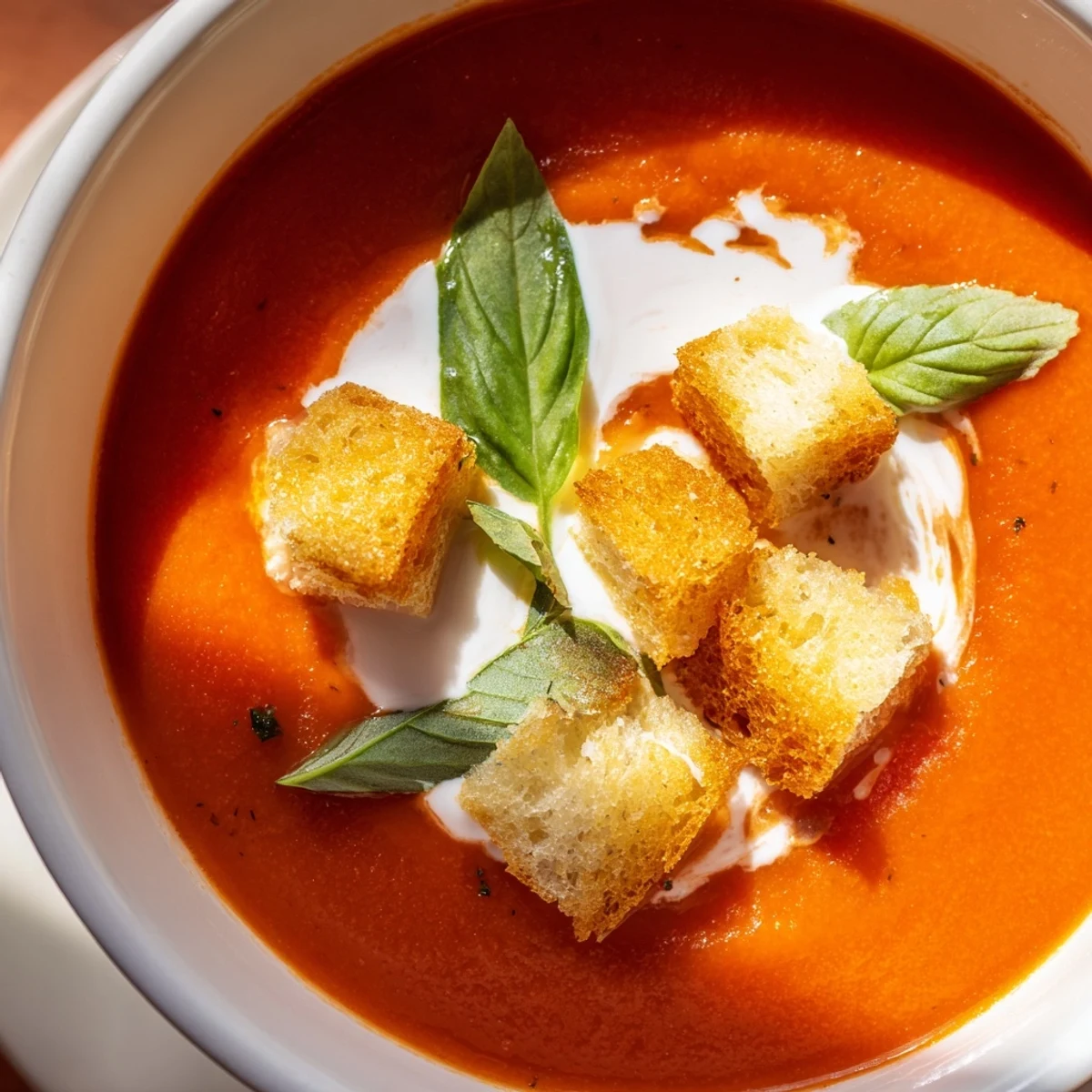
Save This velvety tomato basil bisque combines sautéed onions, garlic, and aromatic herbs simmered with canned tomatoes and vegetable broth. Finished with heavy cream and fresh basil, it delivers a rich, smooth texture. Crisp golden croutons add a delightful crunch, balancing the silky soup. Perfect for a cozy lunch or dinner, this dish offers an easy way to enjoy classic flavors enhanced with fresh ingredients.
There's something about the smell of tomatoes hitting hot oil that instantly transports me to my kitchen on a rainy afternoon. A friend had just dropped off a bag of fresh basil from her garden, and I had half a can of tomatoes staring at me from the pantry—so I decided to turn it into something warm and comforting. The first spoonful, with that velvety texture and bright basil finish, reminded me why tomato soup doesn't need to be complicated to be unforgettable.
I made this for my roommate during her first week at a new job, when she came home looking exhausted and defeated. Watching her face soften as she tasted that first spoonful was worth every minute of chopping—she texted me the next day asking if I could make it again because it had genuinely made her night better.
Ingredients
- Olive oil: Use good quality oil here since it's foundational to the flavor base—it's worth the few extra cents.
- Yellow onion: Sweeter and more mellow than white onions, it provides a gentle backbone that doesn't overshadow the tomatoes.
- Garlic cloves: Fresh garlic matters because the heat releases its oils at just the right moment—skip the jar stuff.
- Celery stalk: People often skip this, but it adds subtle depth that rounds out the acidity of the tomatoes.
- Canned whole tomatoes: San Marzano varieties are beautiful, but any decent brand works—the liquid they're packed in is liquid gold for your soup.
- Vegetable broth: This dilutes the intensity just enough so the soup tastes bright instead of one-note.
- Tomato paste: A small amount concentrates the tomato flavor without adding extra liquid.
- Sugar: Just a teaspoon softens the acidity—trust me on this even if you think the tomatoes are already sweet.
- Salt and pepper: Season in layers, not all at once.
- Dried oregano: This is your secret herb—it bridges the gap between raw tomato and cooked tomato flavor.
- Bay leaf: Remove it before blending or you'll have confetti in your soup.
- Heavy cream: The final touch that makes it a bisque instead of just tomato soup.
- Fresh basil: Add this at the very end so the heat doesn't kill its brightness—that's where the magic lives.
- Day-old bread: Stale bread absorbs the oil better and crisps up more evenly than fresh bread.
- Garlic powder for croutons: Different from fresh garlic, it adds a toasted, mellow note that complements the crispy exterior.
Instructions
- Start with the base:
- Heat your olive oil over medium heat and let it warm for about 30 seconds—you'll see it glisten and loosen up. Add your onion, celery, and a pinch of salt, then let them soften together for 5 to 6 minutes, stirring now and then. The salt helps draw out their moisture and speeds up the softening process.
- Build the flavor:
- Once the onion is translucent and the celery smells sweet, add your minced garlic and cook for just about a minute—you're listening for the kitchen to smell amazing and looking for the raw edge of the garlic to disappear. Next comes the tomato paste, which you should stir in and let toast for a full minute; this caramelizes it slightly and deepens the tomato flavor instead of just adding acidity.
- Bring it together:
- Pour in your canned tomatoes with all their juice, then add the broth, sugar, oregano, bay leaf, salt, and pepper. Bring the whole thing to a boil—you'll see bigger, more aggressive bubbles—then drop the heat down to a gentle simmer where just a few bubbles break the surface every second or two. Let it bubble quietly for 20 minutes, stirring occasionally, so the flavors marry without the top drying out.
- Make the croutons while the soup cooks:
- Preheat your oven to 200°C (400°F) and toss your bread cubes with olive oil, garlic powder, salt, and Italian herbs if you have them. Spread them on a baking sheet and roast for about 10 to 12 minutes, giving them a stir halfway through, until they're golden and make a hollow sound when you bite one—don't walk away or they'll turn from golden to burnt in a heartbeat.
- Blend to silk:
- After the soup has simmered, fish out the bay leaf, then use an immersion blender to puree the soup right in the pot until it's completely smooth and velvety. If you're using a regular blender, work in batches and be careful because hot soup can splatter—let each batch cool for just a minute before blending.
- Finish with cream and basil:
- Pour in your heavy cream and add the chopped fresh basil, then let it simmer for 2 to 3 minutes just to warm through. The basil should stay bright green, not turn dark, so keep the heat gentle and don't simmer it longer than you need to.
- Taste and adjust:
- This is the moment to taste and decide if it needs more salt, pepper, or a touch more cream to balance the acidity. Every pot is different depending on your broth and tomatoes, so trust your palate.
- Serve with ceremony:
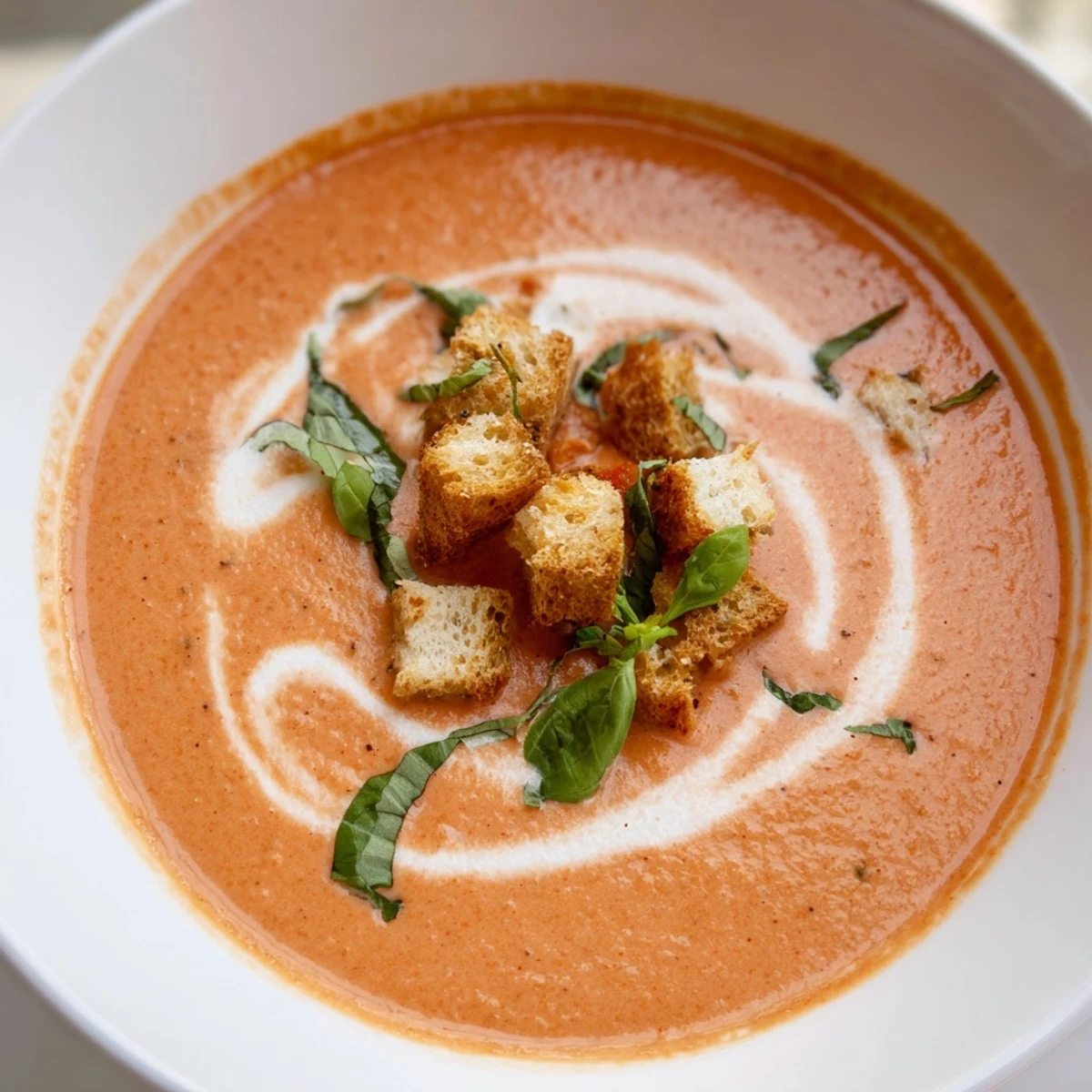
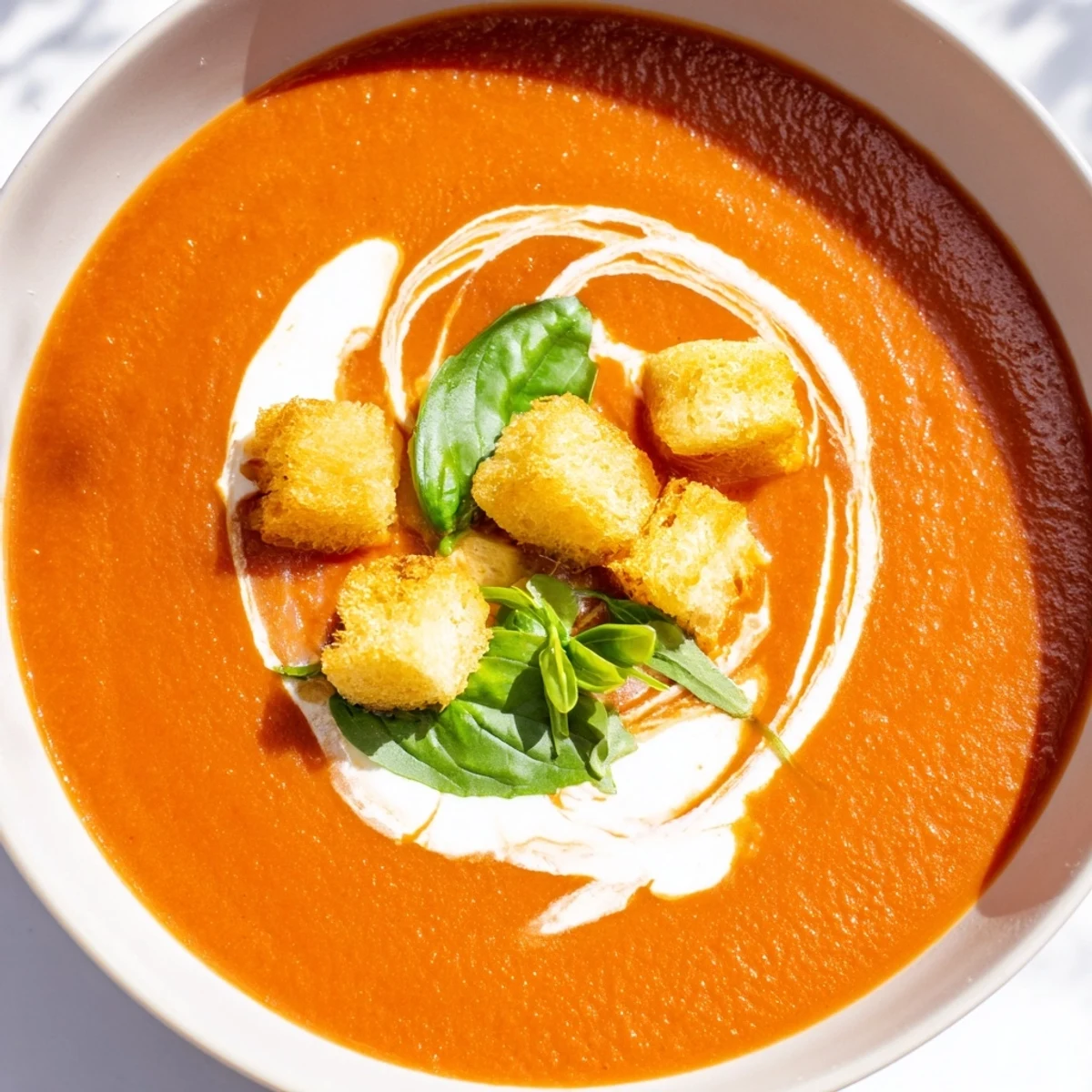
- Ladle the bisque into bowls, top with your crispy croutons, and scatter extra basil on top if you have it. Serve it hot, and watch people's faces as they take that first spoonful.
 Save
Save The first time I served this to my partner's parents, they each had two bowls and asked for the recipe before dessert even arrived. It became the soup I made whenever someone was going through a rough patch, because there's something about creamy tomato bisque that feels like a warm hug in a bowl.
Why Texture Matters So Much
The contrast between the silky bisque and the crispy crouton is what makes this dish memorable—without that crunch, it's just another smooth soup. I learned this the hard way when I made a batch without croutons because I was too tired to deal with the extra step, and it felt flat and one-dimensional no matter how much basil I added. Now I understand that texture isn't a luxury, it's essential.
Making It Your Own
This recipe is a springboard, not a rulebook. I've made it with roasted red peppers for a subtle smokiness, swapped the oregano for thyme when I had it on hand, and even added a pinch of smoked paprika on nights when I wanted something with more depth. The beauty is that as long as you nail the tomato, cream, and basil balance, the other details bend to your mood and your pantry.
Serving Suggestions and Variations
This bisque pairs beautifully with a grilled cheese sandwich for that nostalgic comfort meal, but it also stands alone as an elegant first course if you want something lighter. I've paired it with crusty bread, served it as a chilled soup in summer, and even used it as a base for other soups by thinning it out. If you're vegan, swap the heavy cream for coconut cream or cashew cream, and the dish transforms into something just as luxurious.
- A crusty baguette alongside is never wrong and turns a simple soup into a complete meal.
- Cold tomato bisque in summer is unexpectedly refreshing—blend in an extra touch of basil and chill it for a few hours.
- Leftover bisque keeps for three days in the fridge and freezes beautifully for up to a month, so make extra without guilt.
 Save
Save This is the soup I make when the world feels overwhelming or when someone needs proof that the simplest things done with care taste the best. It's become the recipe I know by heart, the one I don't need to look up, and the one that reminds me why cooking for people matters.
Recipe FAQs
- → What gives the bisque its creamy texture?
-
The creamy texture comes from stirring in heavy cream towards the end of cooking, which enriches the smooth blended soup.
- → How are the croutons prepared for garnish?
-
Bread cubes are tossed with olive oil, garlic powder, and herbs, then baked until golden and crisp to add a crunchy topping.
- → Can the bisque be made vegan-friendly?
-
Yes, substitute heavy cream with coconut or cashew cream to maintain a creamy consistency without dairy.
- → Is it necessary to blend the soup completely smooth?
-
Blending ensures a velvety bisque texture, but some prefer a slightly chunky feel depending on personal taste.
- → What spices enhance the tomato and basil flavors?
-
Dried oregano, black pepper, and bay leaf are simmered with the tomatoes to deepen the herbal and savory notes.